

Memory Machine: Empowering Independence for Memory Loss Patients
118+
Assets onboarded during the pilot phase (25% of the total fleet).307+
Clients and five distributors were onboarded in the initial rollout.10,000+
Of FSI employees are using AssetCONNECT internally.
HealthTech
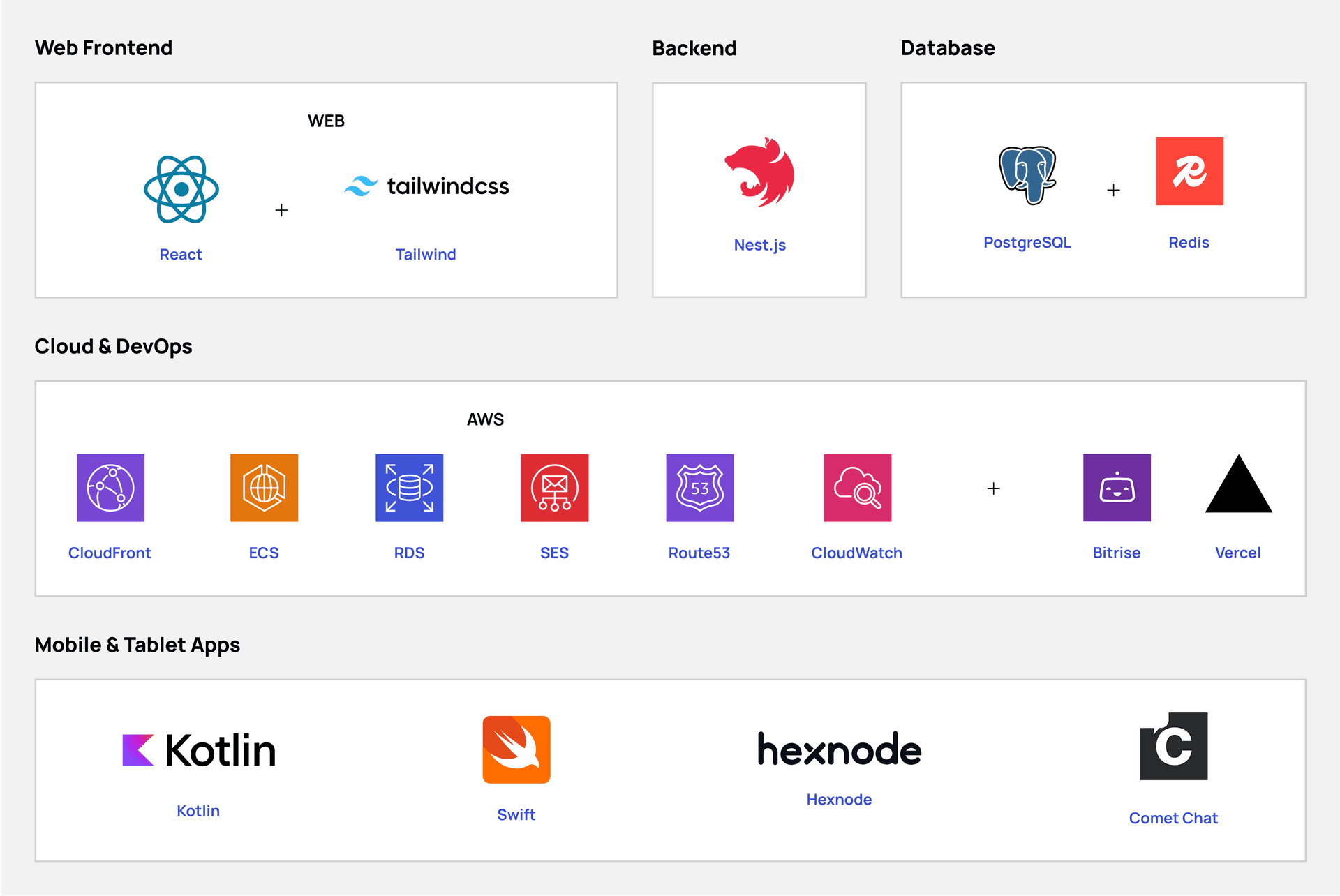
React | NestJS | AWS | PostgreSQL | Kotlin | Swift
2021 – 2026 Ongoing (Support + Enhancements)
Empowering Cognitive Wellness Through Technology
Memory Machine is an Australia-based health-tech startup transforming how individuals with memory loss live, communicate, and stay independent.
SoluteLabs partnered with Memory Machine to build a connected platform that bridges patients, caregivers, and healthcare professionals, making daily routines, reminders, and communication effortless and secure.
Solution
We developed a unified digital ecosystem that enhanced patient engagement and streamlined caregiver operations while maintaining strong security and performance standards. The goal was to create a connected, reliable, and intuitive experience across all platforms, ensuring ease of use, scalability, and compliance with healthcare requirements.
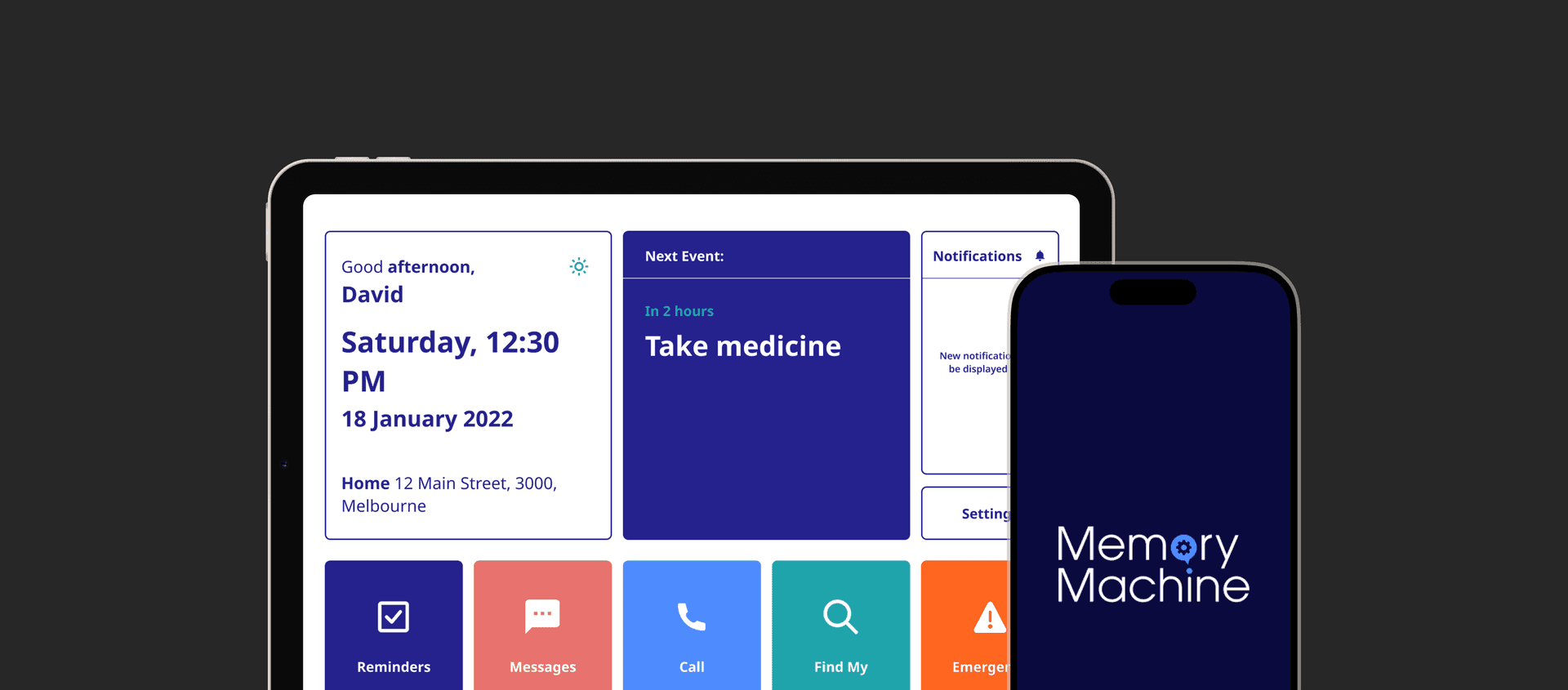
Patient Tablet App
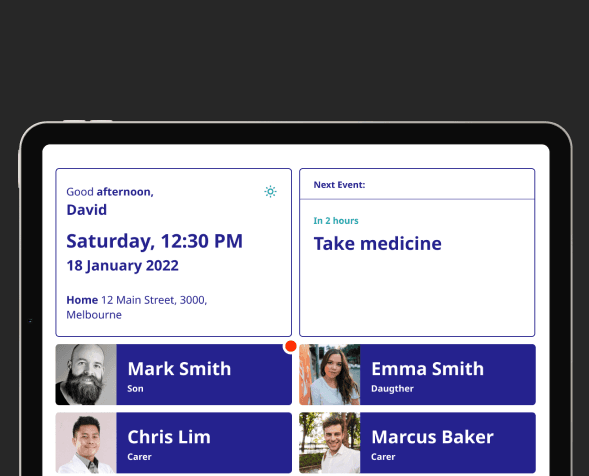
Caregiver Mobile App
Secure Multi-Tenant Backend
Cloud & DevOps
Third-Party Integrations
Performance & SEO
Headless Shopify Integration
Deliverables
Accessible Tablet Experience
- A simple kiosk-mode interface designed for cognitive ease and minimal navigation complexity, ensuring patients can use it independently.
Caregiver Companion App
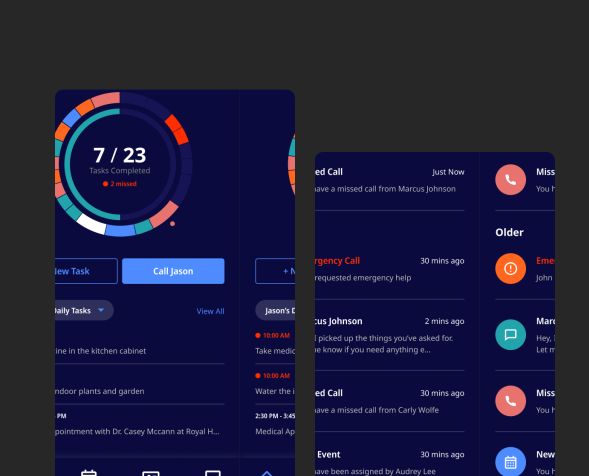
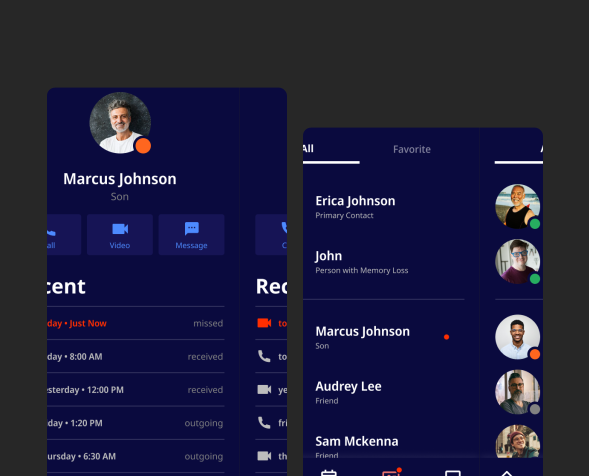
- Mobile dashboards allow caregivers to manage routines, monitor patients, and receive real-time updates and notifications.
Secure, Scalable Backend
- Multi-tenant architecture with encrypted storage and strict access rules to maintain HIPAA compliance and data integrity.
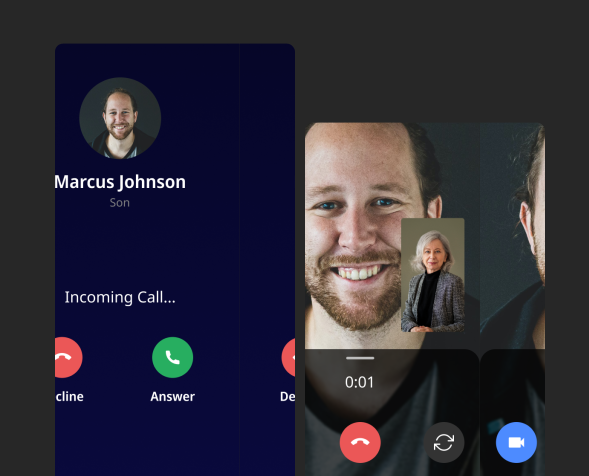
Reliable Communication Layer
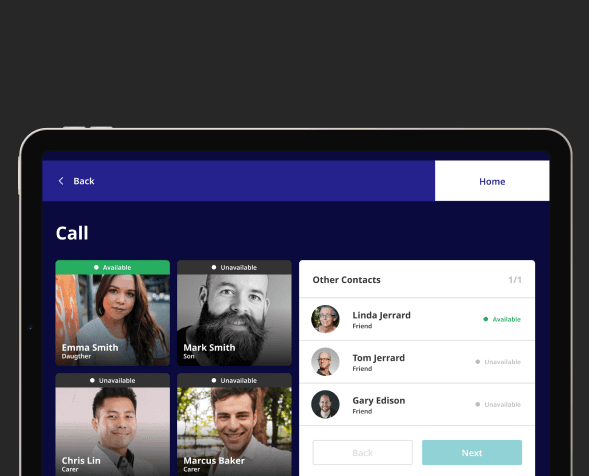
- Optimized chat and video calling functionality that ensures stable, low-latency communication between patients and caregivers.
Optimized Cloud Infrastructure
- AWS-hosted architecture with ECS, RDS, and CloudWatch for high availability, performance, and cost-effective scalability.
Key Features
User-Friendly Interface
Simplified UI designed specifically for individuals with cognitive challenges.
Data Tracking & Analysis
Tracks memory performance and behavioral patterns to assist caregivers and healthcare providers.
Collaboration & Communication Tools
Enable seamless interaction among patients, caregivers, and medical teams.
GPS Tagging & “Find My Things”
Helps patients locate personal belongings through connected GPS tags.
In-App Notifications
Non-disruptive, context-aware notifications displayed directly within the application.
Push Notifications
Timely reminders for medications, appointments, or daily activities, even when the app isn’t open.
Hexnode Integration”
Locks the tablet into kiosk mode, allowing only one active app to reduce confusion and distraction.
Paywall Feature
Subscription-based access with one-time payment unlocking all features.
Caregiver Customization
Adjusts available features based on the patient’s memory loss level (1–5), ensuring simplicity and ease of use.
Tech Stack
Product Development Methodology
The project followed Agile methodology with sprint-based iterations, continuous feedback, and feature validation through user testing with hospitals and caregivers.
Sprint Planning
Focused on usability and accessibility for memory-impaired users.
UI/UX Validation
Prototypes built in Figma were tested with and patients.
Cloud Engineering Setup
Configured using AWS best practices to ensure data security, uptime, and scalability.
CI/CD Pipelines
Automated builds, tests, and deployments via Bitrise and AWS ECS.
Iterative Releases
Gradual deployment across patient groups with continuous support and maintenance.
Implementation Highlights
Discovery Sprint
CI/CD setup, infrastructure design, and environment configuration.
Sprint 1–2
Authentication, caregiver onboarding, and initial patient registration.
Sprint 3–4
Stripe integration, user roles, and payment management.
Sprint 5–6
Notification engine, reminders, and in-app communication tools.
Sprint 7–8
Kiosk mode, dashboard analytics, and usability refinements.
Support Phase
Ongoing maintenance, landscape mode support, and feature enhancements.
Customer Journey
ACTION/PROCESS
STAKEHOLDERS

Discovery & Setup
Configuration
Engagement
Optimization
Support & Maintenance
Initial sprints for core setup and caregiver onboarding
Caregiver management, reminders, and alerts setup
Communication tools and push notifications integrated
Data tracking, analytics, and dashboard rollout
Continuous updates, Hexnode integration, bug fixes
Aligned design with patient usability needs
Personalized patient experience
Improved coordination and timely reminders
Better caregiver insight into patient progress
Long-term reliability and scalability
Key Takeaways
Human-Centered Cognitive Support Memory Machine digitized cognitive care through an accessible, tablet-first design that empowers patients with memory loss to manage daily routines independently.
Caregiver Empowerment Caregivers gain real-time visibility, analytics, and secure communication, supported by a multi-tenant architecture that ensures data privacy and system scalability.
Agile, Feedback-Driven Delivery Agile sprints enabled continuous improvement, incorporating direct input from caregivers and healthcare professionals for a practical, evolving solution.
Future-Ready Enhancements Upcoming developments include AI-powered reminders, hospital system integrations, and enhanced accessibility to boost patient autonomy and caregiver efficiency.